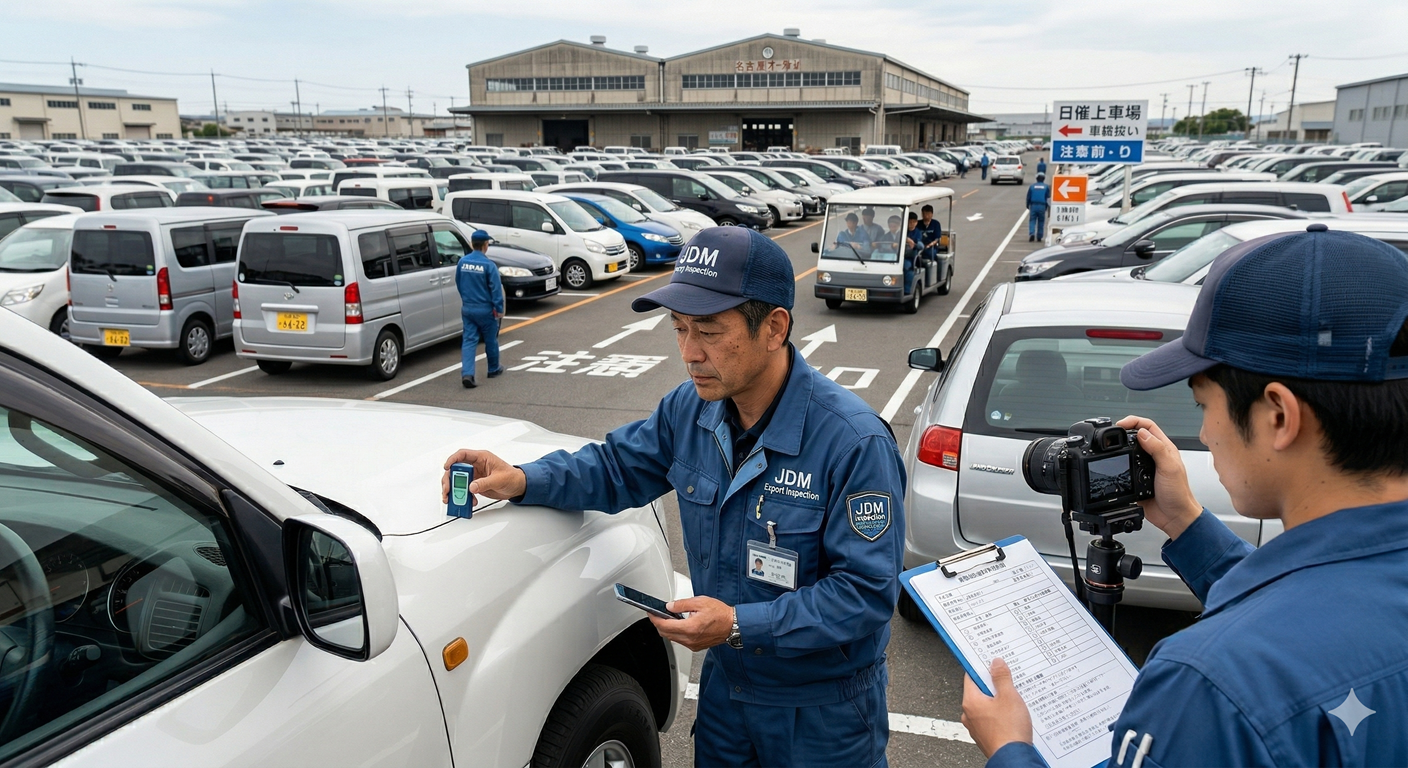
Introduction
On paper, Japanese used car export to Australia should be the easiest trade lane in the world. Australia drives on the left, Japanese brands are among its best-selling new cars, the shipping distance is short compared with Africa or South America, and the country is wealthy, stable and full of car enthusiasts who grew up with Skylines, Supras and RX-7s. Exporters who have done well in New Zealand often assume Australia is the same business on a bigger scale.
It is not. Australia is one of the hardest destinations a Japan-based exporter can choose. There is no general right to import a used car: every vehicle needs a federal import approval before it is shipped, and for a used Japanese car that approval is only available through a small number of concessional pathways. The main two are the older-vehicle pathway (the "25 year rule") and the Specialist and Enthusiast Vehicles (SEVS) pathway, where the car is modified to Australian standards by a Registered Automotive Workshop (RAW). On top of that sit a zero-tolerance asbestos border control, strict biosecurity cleanliness rules, and a tax stack that can include Luxury Car Tax on high-value collector cars.
This guide explains how those rules fit together from the exporter's side of the transaction: what you must check before you bid at auction, what paperwork your Australian buyer will ask for, where shipments get stuck, and which kinds of exporters actually make this market work. The short answer is that Australia rewards specialists: exporters who supply RAW workshops and specialist importers, exporters who source genuinely eligible 25-year-old JDM classics with clean histories, and exporters who understand which models sit on the SEVs Register. It punishes anyone who tries to run it like a volume market.
Rules checked October 2026 — confirm before shipping: The rules in this guide were checked against Department of Infrastructure, Australian Border Force, Australian Taxation Office and Department of Agriculture, Fisheries and Forestry sources in October 2026 (see the sources section). Australian vehicle import rules, the SEVs Register, BMSB country lists and tax thresholds change. Treat this article as orientation, and confirm the current position for each specific vehicle with the relevant authority, a licensed customs broker or the buyer's RAW before you commit money.
🇦🇺Why Australia Is Harder Than It Looks
Most markets covered on this blog regulate used imports with an age limit plus customs duty. Kenya caps vehicle age, several other markets add duty as cars get older, and New Zealand applies entry certification and its Clean Car Standard. Australia works differently. Its starting position under the Road Vehicle Standards Act 2018 (RVSA) is that a road vehicle may only be imported with an approval, and that vehicles entering the Australian fleet must be on the Register of Approved Vehicles (RAV). For new cars, manufacturers get there through type approval. For used imports, the concessional pathways are deliberately narrow.
Approval Before Shipment
Used road vehicles need an entry approval from the Department of Infrastructure before they are shipped. Importing without one is an offence, and the ABF will not release the car. The practical consequence: you cannot ship speculative stock to Australia and sell it on arrival the way some exporters still do in other markets.
Most Used Cars Don't Qualify
A five-year-old Corolla, Prius or X-Trail of a model sold new in Australia generally fits no pathway. That removes the mainstream family-car trade that makes up most of the volume in Africa, the Caribbean and the Pacific. What is left is a niche: old cars, rare cars and SEVS-eligible variants.
Big Fixed Costs Per Vehicle
RAW compliance work, verification, asbestos assurance, biosecurity cleaning, customs brokerage, and state registration inspections all land on each individual car. These costs don't shrink for a cheaper vehicle, so the market only works for cars whose value can carry them.
Border Enforcement Is Real
The ABF treats asbestos as a prohibited import with no tolerance level, and the agriculture department inspects used vehicles for soil, seeds and insects. A car held at the wharf for sampling, re-cleaning or treatment costs storage every day, and the importer pays for all of it.
Market reality: If your business model is buying mid-grade family cars at USS and shipping them in volume, Australia is not your market, and no amount of marketing will change that. If you are good at sourcing specific, well-documented enthusiast vehicles, can work to a buyer's exact chassis and build-date requirements, and are disciplined about paperwork, Australia can be a steady, high-value channel with knowledgeable repeat buyers. It is the same lesson our New Zealand market guide teaches about compliance, only stricter.
🛣️The Import Pathways That Actually Exist
For a used Japanese car, the import approval is normally a concessional RAV entry approval. Granting it both permits the import and allows the vehicle to be entered on the RAV once any required conditions are met. Applications are made online through the department's ROVER portal, and an application fee applies. There are several concessional categories; the two below are the ones that generate trade for Japan-based exporters.
Pathway Comparison
| Pathway | Which vehicles | What happens after arrival |
|---|---|---|
| Older vehicles ("25 year rule") | Cars, vans, motorcycles and light commercials up to 3.5 t GVM built (or last significantly modified) at least 25 years before the application | Entered on the RAV after approval; the buyer then deals with state or territory registration and roadworthiness |
| SEVS (vehicle to be modified by a RAW) | Model and variant listed on the SEVs Register, within the listed build-date range, with an approved Model Report available | RAW modifies the car to the Model Report, an Authorised Vehicle Verifier inspects it, then it can be entered on the RAV |
| Other concessional categories | Narrow cases such as some personal imports or special purposes | Rarely relevant to a Japan-based exporter's trade; the buyer should confirm with the department |
Notice what is missing from the table: a pathway for an ordinary, recent, mainstream used car. That is the single most important fact for any exporter evaluating Australia, and it is why "import car from Japan to Australia" searches are full of disappointed private buyers. Before quoting any Australian enquiry, the first question is always which pathway, and does this exact vehicle qualify?
💡 Tip: Ask the buyer to show you the approval, or at least the pathway and the vehicle's eligibility evidence, before you bid. An Australian buyer who holds a concessional RAV entry approval for a specific VIN or chassis number is a serious buyer. One who says "we'll sort the paperwork when it lands" is asking you to take a risk the rules don't allow.
📅The 25-Year Rule: Importing Older Vehicles
The older-vehicle pathway is the one most JDM enthusiasts mean when they talk about the "25 year rule". The department's criterion covers vehicles originally manufactured, or last significantly modified, at least 25 years before the application is made. The threshold rolls forward every month: as of late October 2026, that broadly means vehicles built in or before October 2001, but the test is always applied to the application date and the evidenced build date, not to the date you ship.
The Details That Catch Exporters Out
📄 Build Date Must Be Evidenced
Eligibility hangs on the build date, and the applicant has to prove it. Evidence the department accepts can include:
- The original sales document, where it still exists
- A deregistration certificate from certain countries, which for Japan means the export certificate trail
- A clear photograph of the VIN or chassis identification
If the build month cannot be shown, the department defaults to December of the build year. A car built in March 2001 but documented only as "2001" is treated as a December 2001 build, which can push eligibility out by months.
🔧 Significant Modifications Reset the Clock
If a vehicle has been significantly modified in the past 25 years, it is no longer treated as an "older vehicle". For cars, the department's list of significant changes covers body, chassis, drivetrain, braking and steering. Engine swaps, big brake conversions and structural chassis work are common on 25-year-old Japanese performance cars, so an auction car with a heavily modified history can be ineligible even though its chassis is old enough. A separate significantly-modified route exists, but vehicles imported that way are not added to the RAV and are not eligible for general registration, which makes them close to worthless for most buyers.
🚫 Restoration Projects & Replicas Are Excluded
The criterion does not cover vehicles that need significant restoration before they are suitable for road use, or new replicas carrying an old vehicle's identification. A rusted-out shell sold as a "project" at auction is the wrong product for this pathway.
⏱️ Timing & State Registration
The department's guidance indicates applications are assessed within about 30 business days, and a granted approval can take up to 48 hours to appear on the RAV. The approval also serves as the import approval. It does not guarantee registration: each state and territory decides whether and how to register the car, with its own inspections. Build the approval lead time into your sourcing calendar so you are not holding a purchased car in a Japanese yard while the buyer waits for a decision.
Exporter takeaway: For older-vehicle orders, your most valuable contribution is documentary. Supply the export certificate with an English translation, clear chassis and identification plate photos, the auction sheet, and an honest note of any modifications you can see. Our guide to car export documents from Japan covers the export certificate and supporting paperwork in detail, and reading the auction sheet properly (see our auction inspection grades guide) is how you spot repair and modification history before you bid.
🏭SEVS, Model Reports & Registered Automotive Workshops
The SEVS pathway exists for vehicles younger than 25 years that Australians cannot buy through normal channels. It is not a pathway for a private buyer who wants a cheaper version of a car already sold locally. To be entered on the SEVs Register, a vehicle must not be genuinely available to Australian consumers and must meet one of six eligibility criteria set out in the department's guidance: performance, environmental performance, mobility, left-hand drive, campervans and motorhomes, or rarity. Entries are specific to a make, model, variant and build-date range.
How a SEVS Import Works
📋 The Register Entry Comes First
The vehicle must have a current SEVs Register entry that will not expire before the import application is decided, and its build date must fall within the entry's range. Entry on the register does not guarantee the vehicle can be modified to comply or that an approval will be granted.
📘 An Approved Model Report Is Required
To be eligible for a concessional RAV entry approval as a vehicle to be modified by a RAW, there must be an approved Model Report covering that vehicle. The Model Report is the engineering plan for bringing that specific model into line with the applicable Australian standards. RAWs develop Model Reports or hold access to them, which is why the RAW, not the exporter, usually decides exactly which variant and build window is worth importing.
🛠️ RAW Modification & Verification
After arrival, a RAW modifies the vehicle in accordance with the Model Report. An Authorised Vehicle Verifier (AVV) then inspects it and verifies the work before the vehicle can be entered on the RAV. Only then can the buyer approach state registration. Each of these steps takes time and money on the Australian side, so the car you supply must be worth that effort.
For a Japan-based exporter, the implication is clear: under SEVS, your real customer is the RAW or the specialist importer it works with. These businesses know which register entries and Model Reports they can use, which build dates are inside the window, and which specification differences (engine code, transmission, trim) matter. They tend to order repeatedly, specify tightly, and reject cars that don't match. An exporter who can find the exact variant, confirm the chassis code and build date before purchase, and send consistent documentation becomes genuinely valuable to them.
💡 Tip: Do not try to judge SEVS eligibility from a model name alone. Two cars sold under the same name in Japan can have different variants, engines and build ranges, and only some may be on the register. Ask your RAW buyer for the register entry and the build-date range in writing, and check the chassis code against it before you bid. The public SEVs Register and the RAW scheme pages on the department's site are the reference, not forum lists.
📋Step-by-Step: From Japanese Auction to the RAV
The sequence below shows where the exporter's work sits in an Australia-bound transaction. The order matters more here than in almost any other market, because doing a step late (or not at all) can strand a car at the border.
1. Confirm the pathway and the exact vehicle
Agree with the buyer whether the car is an older-vehicle or SEVS import, and the chassis code, variant and build-date window that qualifies. For SEVS, get the register entry and the RAW's confirmation that a Model Report covers it.
2. Source and pre-check in Japan
Read the auction sheet for repair history, modifications and rust. Check identification plates, look for evidence of non-original brakes, clutch or gaskets, and photograph everything. Our Japan car auction software page describes how purchase records and auction data can be kept together for this kind of tightly specified buying.
3. Buyer applies for the import approval through ROVER
The Australian applicant (the buyer, specialist importer or RAW, depending on the arrangement) lodges the concessional RAV entry approval application with your evidence. Do not ship until the approval is granted.
4. Asbestos assurance before shipment
Identify at-risk components and either obtain manufacturer evidence that they are asbestos-free or have them removed and replaced, keeping detailed work records linked to the chassis number. See the next section.
5. Biosecurity cleaning and pre-inspection
Clean the vehicle inside and out, including underbody and engine bay. Using a department-recognised offshore cleaning and pre-inspection provider in Japan reduces onshore intervention, provided the provider's AEI code is declared correctly.
6. Ship, declare and clear
The buyer's customs broker lodges the import declaration, pays duty, GST and any Luxury Car Tax, and manages biosecurity clearance on arrival.
7. RAW work, verification, RAV and registration
For SEVS cars, the RAW modifies the car to the Model Report and an AVV verifies it before RAV entry. For older vehicles, RAV entry follows the approval. Either way, state or territory registration is the last, separate step.
Operational takeaway: Each Australia-bound car carries more documents and more dependent steps than a typical export unit: approval reference, build-date evidence, asbestos records, cleaning certificates, auction sheet, export certificate, invoice and Bill of Lading. Keeping these attached to the vehicle record rather than scattered across email threads is what prevents a car from shipping before its approval or without its asbestos file. That is the problem export documentation software is meant to solve.
⚠️The Asbestos Border Control: Australia's Least Forgiving Rule
Australia banned the manufacture and use of all forms of asbestos from 31 December 2003, and a border control took effect at the same time. The ABF's guidance for vehicle importers is blunt: the import prohibition applies to all vehicles of any type, age or value, and tolerance levels accepted in other countries "will not be accepted at the Australian border". The importer must know the vehicle's history and ensure it contains no asbestos before it is shipped.
This hits the 25-year-old enthusiast trade hardest, because older cars are more likely to have original or aftermarket friction materials and heat-resistant gaskets of uncertain composition. The ABF also warns that aftermarket parts from countries that allow asbestos can be as much of a risk as older OEM parts, so a car that has been "refreshed" with cheap replacement brake pads is not automatically safe.
Where the ABF Says to Look
The most common detections are in brakes and in gaskets designed to resist heat. The ABF's fact sheet lists at-risk parts including brake pads and shoes, clutch linings, cylinder head, extractor and exhaust gaskets, heat shields, firewalls, bonnet liners, heater and air-conditioner housings, fibrous washers, sound-deadening material, and various seals. It also notes that the ABF cannot give technical advice on where asbestos will be present in a particular vehicle, and that similar vehicles can be risk-assessed differently.
What Counts as Sufficient Assurance
| Evidence | ABF position | Exporter action |
|---|---|---|
| Supplier or mechanic letter saying "no asbestos" | Described as insufficient assurance on its own | Don't rely on it; don't offer it as your only evidence |
| Manufacturer technical evidence for OEM parts | Claims of no asbestos in OEM parts should be supported by evidence from the manufacturer | Help the buyer obtain parts and specification data tied to the chassis |
| Removal and replacement records | Retain work records plus make, model and content evidence for the new parts | Document part numbers, invoices and photos, linked to the VIN or chassis number |
| Overseas sampling and testing | Must meet Australian laboratory reporting requirements and be specific to the vehicle | Confirm the lab and report format with the buyer's broker before testing |
If assurance is judged inadequate, the ABF can direct that the vehicle be sampled and tested at the border. The owner must engage a qualified, independent competent person, testing in Australia must be done by a NATA-accredited laboratory, and the owner pays for the delay and the work. Unlawfully imported asbestos can lead to prosecution and fines. Import permission for vehicles containing asbestos will not be considered if the vehicle is to be driven in Australia.
Practical approach: Agree with the buyer, before purchase, who pays for asbestos remediation in Japan and what evidence will be produced. For many older cars, the cheapest route is replacing brake and clutch friction parts and the at-risk gaskets with documented asbestos-free parts before shipping, rather than gambling on a border test. Build that cost into your quote as a line item. A thorough pre-shipment inspection is where these parts get identified.
🪲BMSB Season & Vehicle Cleanliness
Biosecurity is the second border gate. The Department of Agriculture, Fisheries and Forestry (DAFF) treats every arriving vehicle as subject to biosecurity control, and contamination such as soil, seeds, plant material, animal material or live insects must be dealt with by treatment, re-export or destruction at the importer's cost.
Japan's BMSB Status for 2026-27
The brown marmorated stink bug (BMSB) seasonal measures for 2026-27 began on 1 September 2026. Goods measures apply to targeted goods (including vehicles and machinery) manufactured in or shipped from target risk countries, generally for shipments between 1 September and 30 April. Japan's position is different from those countries:
- Heightened vessel surveillance only: DAFF lists Japan as a target risk country for heightened vessel surveillance only. That applies to roll-on/roll-off vessels that berth, load or tranship in Japan, which face seasonal pest inspection; it is a vessel measure, not a mandatory treatment of each car.
- Emerging risk country: Japan is also listed as an emerging risk country, which means consignments can be selected for random onshore inspection.
- Routing matters: A car transhipped through, or shipped on a vessel loading in, a target risk country can be drawn into stricter measures. Confirm the routing with your forwarder during the season.
New Zealand runs its own, separate seasonal rules for vehicles shipped from Japan, so do not assume what applies on the New Zealand lane also applies to Australia, or the other way round. Country lists and measures are reviewed every season, so check DAFF's BMSB page each August before quoting season shipments.
Used Vehicle Cleanliness & Offshore Pre-Inspection
Outside BMSB, used vehicles face a full external and internal inspection on arrival unless they have been processed by a department-recognised offshore cleaning and pre-inspection provider (ROCIP). DAFF has approved ROCIP facilities in Japan, including JEVIC sites, for used passenger vehicles. Vehicles from recognised providers get a reduced onshore intervention rate (DAFF industry advice describes 5% compared with 100% for other used vehicles), as long as the facility's AEI code is entered on the import declaration. If the code is missing, the car is treated as unprocessed and gets the full inspection.
💡 Tip: For Australia, offshore cleaning is cheap insurance. Pass the provider's certificate and AEI code to the buyer's customs broker with the shipping documents, not after the ship arrives. Our JEVIC certificate guide explains what a JEVIC inspection covers. Confirm on DAFF's current ROCIP list that the facility you use is approved for the vehicle type you are shipping.
💵Used Vehicle Import Duty, GST & Luxury Car Tax
Australia's tax stack on an imported used car is simpler than Ireland's emissions-based VRT, but it has a trap at the top end. These are paid by the Australian importer through their customs broker, not by the exporter, but your buyer will expect you to understand them because they decide whether a car is worth importing.
| Charge | Rate / basis (as checked October 2026) | Notes |
|---|---|---|
| Customs duty | General rate of 5% for second-hand passenger cars, on the customs value | Preferential and age-based concessions may apply; confirm the tariff line with a licensed customs broker |
| A$12,000 used vehicle duty | Removed from 1 January 2018 | Many older guides still quote it; any cost sheet showing it is out of date |
| GST | 10% of the value of the taxable importation | That value broadly includes customs value, duty, and international transport and insurance |
| Luxury Car Tax (LCT) | 33% of the value above the threshold: A$91,661 (fuel-efficient) or A$80,809 (other) for 2026-27 | Applies to imported luxury cars, including by private importers; thresholds are indexed every 1 July |
| State charges | Stamp duty, registration and inspection fees | Vary by state or territory; outside federal customs |
Three Points Worth Getting Right
The $12,000 Duty Is Gone
The Customs Tariff Amendment (Incorporation of Proposal and Other Measures) Act 2017 replaced the old used-vehicle rates with 5% from 1 January 2018. Exporters still see the A$12,000 figure in old forum threads and shipping blogs. Quoting it makes you look out of touch with a market where buyers check everything.
Japan-Origin Preference & Very Old Cars Need a Broker's Answer
The Japan-Australia Economic Partnership Agreement (JAEPA) cut duty on many Japanese goods, and Schedule 4 of the Customs Tariff Act contains a concession item for certain vehicles 30 years old or more. Whether either applies to a particular second-hand car depends on the tariff classification, origin evidence and the concession's conditions. We could not confirm a single rule that covers every case, so have the buyer's licensed customs broker confirm the rate before you quote a landed cost.
LCT Bites on Collector Cars
The cars Australians most want from Japan — clean R34 GT-Rs, A80 Supras, NSXs — can have LCT values well above the threshold once duty and GST are included. At 33% of the excess, LCT can add a large sum to the buyer's bill. The ATO publishes how LCT is worked out on an import; point high-value buyers there and to their broker early, before they bid.
Verify before you quote: The figures above come from official sources checked in October 2026, but tariff rates, concessions and LCT thresholds change and depend on the specific vehicle. Present duty, GST and LCT as estimates for the buyer's broker to confirm, never as a fixed landed price. For building the rest of the cost stack, see our car export pricing and valuation guide.
🎯Who Realistically Succeeds in the Australian Market
Put the rules together and three types of business turn out to be viable. Each one runs differently.
1. Suppliers to RAW Workshops & Specialist Importers
This is the most repeatable business. RAWs and specialist importers know their register entries and Model Reports and need a Japan-side partner who can find specific variants within specific build dates, inspect them honestly, and ship them with clean paperwork. Volumes are modest, but orders recur and buyers stay with suppliers they trust. Success depends on accuracy: wrong variant, wrong build month or undisclosed repairs and the relationship ends.
2. Enthusiast & JDM-Classic Sourcing (25+ Years)
The rolling 25-year window keeps bringing well-known JDM cars into eligibility. As of late 2026, the window reaches the early-2000s run-out years of several cult models, though eligibility always depends on the individual car's evidenced build date. Models enthusiasts commonly chase include:
- Nissan Skyline GT-R (R32, R33 and earlier R34 builds), Silvia and 180SX
- Toyota Supra (A80), Chaser and Mark II, Soarer, Land Cruiser 80 series
- Mazda RX-7 (FD), Honda NSX, Integra Type R and Civic Type R, Mitsubishi Lancer Evolution
These buyers pay for documentation and honesty. Modification history is the biggest risk: a car with recent significant modifications can be ineligible under the older-vehicle criteria, and heavily tuned cars are also the most likely to carry aftermarket friction parts of unknown content.
3. SEVS-Eligible Models, Sourced to Order
Some younger Japanese vehicles qualify under SEVS criteria such as performance, environmental performance, mobility or rarity. The work here is to the RAW's specification, and only for variants actually on the register with a Model Report available. Exporters who try to guess which "JDM-only" models are eligible and ship them on spec are the ones who end up with stranded stock.
Who Australia does not suit: Exporters whose margins depend on volume, speed and mid-grade mainstream stock. If that describes your business, Pacific markets like Fiji, or New Zealand with its own compliance demands, are a more natural Oceania fit than Australia.
🚢Shipping, Ports & Payment for Australia
Japan to Australia is a well-served route, with regular car-carrier services from major Japanese ports to Australia's main vehicle gateways on the east and west coasts. Ocean transit is short by export standards, but compliance steps after arrival usually take much longer than the voyage, so quote buyers a realistic timeline from approval to registration, not just the sailing time.
RoRo Shipping
The cost-efficient default for standard units, with frequent sailings.
- Ro-Ro vessels from Japan face seasonal BMSB vessel surveillance
- Car must be a runner and clean on loading
- Suits RAW batch orders of mid-value vehicles
Container Shipping
Preferred for high-value collector cars where protection matters more than freight cost.
- Better protection for GT-Rs, Supras and NSXs
- Can carry non-running or low-clearance cars
- Container cleanliness is part of the biosecurity picture
For the trade-offs in detail, see our RoRo vs container shipping comparison. Whichever you choose, the destination port should be agreed with the buyer in advance, because the RAW doing the compliance work may be in a different state from the end customer.
Payment Terms
- Low payment risk: Australia has a mature banking system and no exchange controls; telegraphic transfer in JPY, USD or AUD is standard.
- Deposit before bidding: Because cars are sourced to a specific approval or specification, take a meaningful deposit before you buy, and agree in writing what happens if the approval is refused.
- Balance against documents: Tie the balance to shipping documents, not to RAV entry or state registration, which are outside your control and can take weeks.
- Itemise Japan-side compliance: Asbestos remediation, offshore cleaning and inspection should be separate quote lines so the buyer can see exactly what they are paying for.
📊The Cost Stack: Who Pays for What
We have deliberately not published a "typical landed cost" for Australia. RAW fees, asbestos work and state charges vary too much by vehicle and state for one number to be honest. What we can show is the structure, so you and your buyer agree on responsibility before anything is purchased.
| Component | Who typically handles it | Notes |
|---|---|---|
| Auction price, fees, inland transport | Exporter | Buy only against a confirmed pathway and specification |
| Asbestos remediation / evidence | Exporter, charged to buyer | Done in Japan before shipment, with records tied to the chassis |
| Cleaning and offshore pre-inspection | Exporter, charged to buyer | Use a DAFF-recognised provider; pass on the AEI code |
| Ocean freight & insurance | Exporter, quoted to buyer | RoRo or container depending on value |
| Import approval application fee | Australian applicant | Paid through ROVER before the application is considered |
| Duty, GST, LCT, broker and port charges | Buyer, via customs broker | Broker confirms tariff line and concessions |
| RAW modification & AVV verification | Buyer or RAW | SEVS imports only |
| State registration & stamp duty | Buyer | Separate from federal approval; varies by state |
Your margin in Australia comes from accuracy and trust rather than from being the cheapest bidder. A car that matches the specification, arrives with a complete asbestos file and a recognised cleaning certificate, and clears without intervention saves the buyer far more than a few thousand yen at auction. Tracking that across several Australia-bound cars alongside your other markets is where a spreadsheet starts failing; see our pricing plans for what it costs to run purchases, stock records, documents and transport orders in one system.
❌Common Mistakes Exporters Make with Australia
❌ Shipping Before the Approval Is Granted
Approval comes before shipment, not after. A car that lands without one cannot be released, and the options left are expensive: storage while an application is attempted, or re-export.
❌ Assuming a Model Name Means SEVS Eligibility
Register entries are variant and build-date specific. Check the chassis code and build date against the actual entry, with the RAW's confirmation that a Model Report covers it.
❌ Counting 25 Years from the Wrong Date
The test is the build date (or last significant modification) against the application date. First-registration dates and model years are not the same thing, and an unprovable build month defaults to December.
❌ Treating Asbestos as Paperwork
A one-line "no asbestos" declaration from a supplier is not sufficient assurance. Without proper evidence, the buyer faces border sampling, NATA lab testing, storage and possible prosecution, and will blame the exporter.
❌ Quoting the Old A$12,000 Duty, or Ignoring LCT
The special used-vehicle duty was removed in 2018, while LCT at 33% above the threshold is very real for high-value collector cars. Getting either wrong undermines your credibility with informed buyers.
❌ Skipping Recognised Offshore Cleaning
Used vehicles without recognised offshore pre-inspection face full onshore inspection. Dirty underbodies, engine bays and interiors lead to re-cleaning, treatment charges and delays at the port.
🏁Conclusion: A Specialist Market, Not a Volume Market
Japanese used car export to Australia is a real business, but not the one most exporters picture. Australia has no general route for importing recent mainstream used cars. Every vehicle needs a federal approval before shipment, the realistic pathways are the 25-year older-vehicle criterion and SEVS with RAW compliance, and the border adds zero-tolerance asbestos enforcement and strict biosecurity on top.
The exporters who succeed accept those constraints and build around them. They work to order for RAWs and specialist importers, source honestly documented enthusiast classics as they cross the 25-year line, and treat asbestos assurance, offshore cleaning and build-date evidence as part of the product they sell. That is slower and lower volume than other markets, but the buyers are knowledgeable, the vehicles are high value, and a good reputation brings repeat orders.
Because these rules change, confirm the current position with the Department of Infrastructure, the Australian Border Force, the ATO and DAFF, and with the buyer's licensed customs broker and RAW, before every new vehicle type or season.
Next steps for Australia exporters: Compare Australia's approach with other destinations in our Used Car Import Age Limits & Compliance Matrix. Tighten your Japan-side checks with our pre-shipment inspection guide. When you are ready to run tightly specified, document-heavy orders without losing track of a single car, see how used car export software fits the workflow, or explore CarDeal365's features: inventory records with photo and document attachments, an AI Auction Sheet Reader that pre-fills stock entries, auction purchase tracking, and transport orders.
❓Frequently Asked Questions About Exporting to Australia
Can I import any used car from Japan to Australia?
No. Australia does not allow general imports of used vehicles. Every road vehicle needs an import approval from the Department of Infrastructure under the Road Vehicle Standards Act before it is shipped, and for a used Japanese car that approval is normally only available through a concessional pathway. For exporters, the two pathways that matter are the older-vehicle pathway for vehicles built at least 25 years before the application, and the Specialist and Enthusiast Vehicles (SEVS) pathway, where an eligible model on the SEVs Register is imported to be modified by a Registered Automotive Workshop (RAW). A typical late-model Japanese family car that was also sold new in Australia generally fits neither pathway. Confirm eligibility for the specific vehicle with the department before you buy it at auction.
How does the 25 year rule work for importing a car from Japan to Australia?
Under the older-vehicle concessional RAV entry approval, a passenger car, van, motorcycle or light commercial vehicle up to 3.5 tonnes GVM can be approved if it was manufactured, or last significantly modified, at least 25 years before the application is made. The threshold rolls forward every month, it is measured from the date of the application rather than the date of shipment, and if the build month cannot be proven the department treats it as December of the build year. Vehicles significantly modified in the past 25 years, vehicles that need major restoration before road use, and replicas are not covered. The approval also acts as the import approval, but state or territory registration is a separate decision.
What is SEVS and why do RAW workshops matter to Japanese exporters?
SEVS is the Specialist and Enthusiast Vehicles scheme. A model and variant must be entered on the SEVs Register, which requires that it is not genuinely available to Australian consumers and meets one of six criteria such as performance, environmental performance, mobility or rarity. A vehicle imported under SEVS must be modified to the Australian standards by a Registered Automotive Workshop (RAW) working to an approved Model Report, then checked by an Authorised Vehicle Verifier before it can be entered on the Register of Approved Vehicles (RAV). For a Japan-based exporter, RAWs and the specialist importers who work with them are the repeat professional buyers in this market, because they know exactly which variants and build dates their Model Reports cover.
Do Japanese cars need asbestos checks before being shipped to Australia?
Yes, the risk has to be managed before shipment. Australia has had a border control on asbestos since 31 December 2003 and the Australian Border Force applies it to all vehicles of any type, age or value, with no tolerance for trace amounts that other countries accept. If a vehicle is flagged as at risk, the owner must provide sufficient assurance that it contains no asbestos. A simple letter from a supplier or mechanic is not enough; ABF guidance points to manufacturer technical evidence, records of at-risk parts being removed and replaced, or laboratory testing that meets Australian requirements. Brakes, clutch linings and heat-resistant gaskets are the most common problem areas, which is why 25-year-old enthusiast cars need the most attention.
What duty and taxes apply to a used car imported from Japan to Australia?
Expect customs duty, GST and possibly Luxury Car Tax. The general customs duty rate for second-hand passenger cars is 5 percent; the old A$12,000 per-vehicle special duty on used vehicles was removed from 1 January 2018, so quotes still showing it are out of date. Whether a Japanese-built used car can use a preferential rate, or an age-based concession for very old vehicles, should be confirmed with a licensed customs broker for the exact tariff line. GST is 10 percent of the value of the taxable importation. Luxury Car Tax is 33 percent of the value above the threshold, which for 2026-27 is A$91,661 for fuel-efficient vehicles and A$80,809 for other vehicles, so high-value collector imports can be caught by it.
Does the BMSB season affect cars shipped from Japan to Australia?
Yes, but not in the same way as for target risk countries. For the 2026-27 season, which started on 1 September 2026, the Department of Agriculture, Fisheries and Forestry lists Japan as a target risk country for heightened vessel surveillance only, which applies to roll-on roll-off vessels rather than mandatory treatment of the cars themselves, and as an emerging risk country, which means goods can be selected for random onshore inspection. Separately from BMSB, every used vehicle must arrive free of soil, seeds, plant material and insects. Used vehicles cleaned and pre-inspected by a department-recognised offshore provider in Japan receive reduced onshore intervention. Check the department's current BMSB page before every season, because country lists and measures change.
🔗Sources & Official References
Rules in this guide were checked against the official sources below in October 2026. Where we could not confirm a figure from an official source, the article says so and refers you to the authority or a licensed customs broker.
- Department of Infrastructure: Importing a road vehicle into Australia
- Department of Infrastructure: Concessional RAV entry approvals (including older vehicles)
- Department of Infrastructure: Specialist and enthusiast vehicles (SEVS) and Registered automotive workshops
- Australian Border Force: Managing the risk of asbestos when importing a motor vehicle (fact sheet)
- Federal Register of Legislation: Customs Tariff Amendment (Incorporation of Proposal and Other Measures) Act 2017 (used-vehicle duty change from 1 January 2018)
- Australian Taxation Office: Luxury car tax rate and thresholds and Working out the LCT on an import
- DAFF: Seasonal measures for brown marmorated stink bug (BMSB)
- DAFF: Importing motor vehicles, motorcycles, tyres and machinery and Recognised offshore cleaning and pre-inspection providers
🤝Running Specialist Orders for Australia?
Australia-bound cars are bought to a specification and carry more documents than almost any other export unit. CarDeal365 keeps auction purchases, stock records with attached photos and documents, and transport orders in one place, so every car's paperwork stays with the car. Explore the full feature set, compare pricing plans, or book a demo with our team to see how it would handle a specialist channel like Australia alongside your existing markets.
Related reading
Japanese Used Car Export to the UK
The 10-year IVA rule, NOVA and DVLA registration, duty and VAT, and what UK JDM importers expect from Japan.
Japanese Used Car Export to New Zealand
The neighbouring RHD market, with its own entry certification and biosecurity rules.
Used Car Import Age Limits & Compliance Matrix
Compare age limits and compliance rules across the markets this blog covers.
Pre-Shipment Inspections for Japanese Used Cars
JEVIC, QISJ, EAA and JAAI inspections, and when each one is needed.
JEVIC Certificate Guide
What a JEVIC inspection checks and why destination markets ask for it.
Japanese Car Auction Inspection Grades
Read auction sheets for repair and modification history before you bid.
Car Export Documents from Japan
Export certificate, invoice and Bill of Lading: the paperwork buyers rely on.

About the Author
Muhammad Khabir Uddin
Founder, CarDeal365 · 6+ years in automotive export & SaaS
View LinkedIn Profile