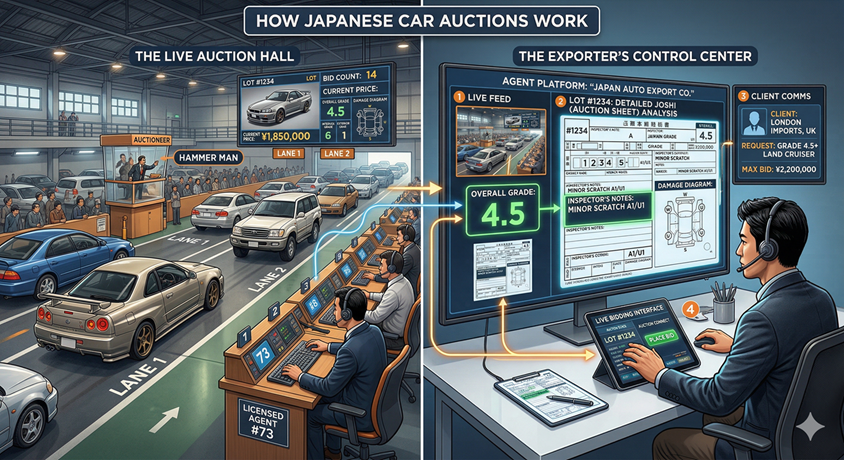
The problem that starts after the bid is won
Our auction bidding software guide covers the discipline needed at the moment of bidding: setting a budget, tracking it live, and converting a single won lot into inventory. This article covers a different problem that shows up a few days later, once you've bought not one unit but fifteen across three auction houses in the same week — how do you keep every purchase, fee, and invoice straight without losing track of which cost belongs to which car?
Reconciling invoices and fees per lot
Auction houses typically bill the winning bid and various fees — buyer's fee, recycling fee, transport arrangement fee — sometimes on the same invoice, sometimes separately, and sometimes days after the auction itself. Without a per-lot record to check against, it's easy for a fee to get missed entirely or applied to the wrong unit, which quietly distorts the landed cost the business thinks it paid.
| Line item | Common reconciliation issue |
|---|---|
| Winning bid amount | Usually clear, but should still be checked against the bid record |
| Buyer's / auction fee | Often billed separately, easy to miss per unit |
| Recycling / disposal fee | Sometimes bundled, sometimes billed later |
| Inland transport arrangement | Frequently invoiced separately from the auction house itself |
When more than one staff member is buying under the same account
Dealerships and export businesses buying at volume often have more than one staff member bidding across different auction houses in the same week, sometimes under a shared account. Without a shared, up-to-date purchase log, it becomes possible for the same invoice line to get reconciled twice, or for a purchase to be missed entirely because nobody realized someone else had already logged it.
Consolidating multiple purchases into a shipment
Units bought across several auctions in the same period often need to be consolidated into one container or booking once they've cleared inspection and prep. That requires visibility into which purchases are ready and which are still pending, so the shipment can be planned around real readiness rather than guesswork. This connects directly to the internal tracking covered in our vehicle shipping workflow guide — purchases need a readiness status before they can be planned into a shipment.
Common auction purchase management mistakes
Waiting for the invoice to record the purchase
Log the win immediately; reconcile the invoice against that record when it arrives, not the other way around.
Treating fees as a lump sum instead of per-unit
Aggregate fee totals hide which specific units are actually profitable.
No shared log across multiple buyers
Separate personal notes per staff member lead to double-counted or missed purchases.
FAQs
What is auction purchase management?
Auction purchase management is the administrative work of tracking and reconciling every unit bought across auctions, including invoices, fees, and payment status, once bidding itself is done.
How is this different from auction bidding software?
Bidding software focuses on budget discipline and winning lots at the right price. Purchase management focuses on what happens after: reconciling auction house invoices, tracking fees per unit, and consolidating multiple purchases into shipments.
Why do invoice mismatches happen with auction purchases?
Auction houses often bill fees separately from the winning bid, and invoices covering multiple lots can be issued days after the auction, making it easy to lose track of which fee applies to which unit without a per-lot record.
How should multiple auction purchases be consolidated into a shipment?
By tracking each unit's location and readiness status until enough units are ready to fill a container or booking together, rather than shipping units individually as soon as each one clears inspection.
Supporting guides in this series
Auction Bidding Software
The bidding-discipline side that happens before this.
Vehicle Shipping Workflow
Where consolidated purchases feed into shipment planning.
Dealer Inventory Management
The record a reconciled purchase should flow directly into.
Japanese Car Auction Fees Explained
Every fee you pay when buying at Japanese car auction — USS, TAA, JU buyer fees, transport to port, deregistration, export customs, agent...
AI-Powered Vehicle Description Generator
How an AI vehicle description generator drafts consistent, accurate listing content from real vehicle data, and why it still needs a huma...
Bidding at USS Tokyo & USS Yokohama
Ultimate exporter guide to bidding at USS Tokyo and USS Yokohama used car auctions.
How to Find Buyers for Japanese Used Cars
Complete guide on how to find buyers for Japanese used cars.
Conclusion
Winning the bid is the visible part of auction purchasing; reconciling invoices, fees, and readiness across a whole buying week is the part that quietly determines whether your margin numbers are actually accurate. Log every purchase the moment it happens, reconcile invoices against that record rather than the reverse, and keep a shared log if more than one person is buying.
See how CarDeal365 reconciles auction purchases, fees, and readiness across your whole buying pipeline.
Book a Demo
About the Author
Muhammad Khabir Uddin
Founder, CarDeal365 · 6+ years in automotive export & SaaS
View LinkedIn Profile